
HPSC Recruitment Controversy: High Court Verdict Exposes Serious Flaws in the Selection Process
Questions Raised Over Transparency in HPSC Recruitment Process
Gustakhi Maaf Haryana: By Pawan Kumar Bansal
Based on observations shared by enlightened reader Satish Mehra
The recent judgment delivered by the Punjab and Haryana High Court on the Assistant Professor recruitment process in Haryana has become a major development for unemployed youth across the state. For several years, questions have continuously been raised regarding transparency in government recruitment, interview marking, selection procedures, and the large number of vacant posts. The High Court’s intervention has once again highlighted the need for fairness and accountability in the recruitment system.
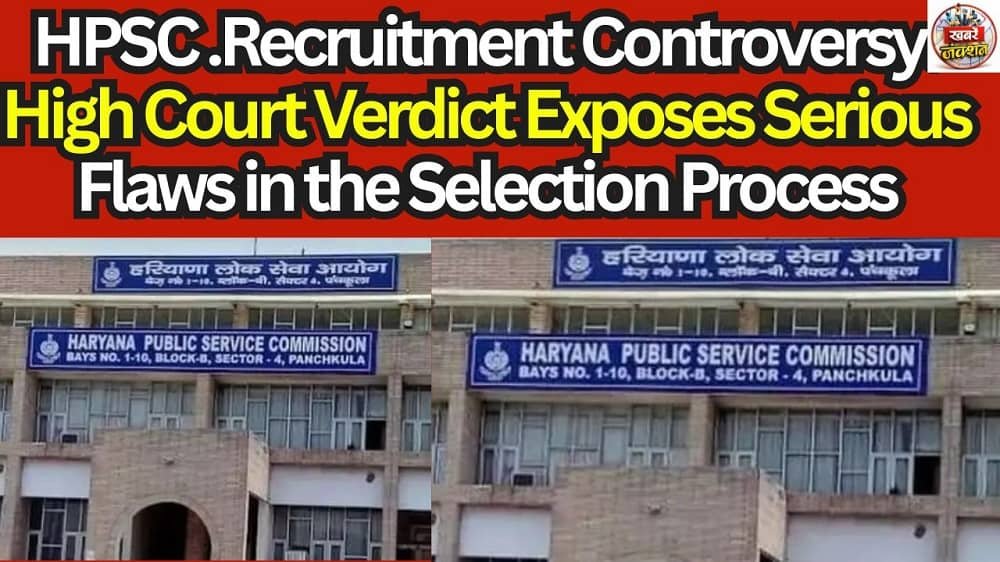
The Haryana Public Service Commission (HPSC) had announced recruitment for 2,424 Assistant Professor posts in 26 subjects. Thousands of highly qualified candidates saw this recruitment drive as an important employment opportunity. However, controversy started growing as the selection process moved forward.
Large Number of Posts Still Vacant
Candidates alleged that transparency was missing in the recruitment process. They also claimed that a large number of posts were intentionally left vacant. Reports suggest that only around 25 percent of the advertised posts have been filled, while the majority of vacancies still remain unoccupied.
Another major concern emerged after reports claimed that many selected candidates belonged to other states. This issue created resentment among Haryana’s unemployed youth. Aspirants argued that Haryana already has thousands of NET-qualified, PhD-holding, and experienced candidates. Therefore, leaving such a large number of posts vacant has raised serious concerns about the recruitment process.
High Court Quashes Recruitment Advertisement
During the hearing of a petition related to English subject recruitment, the Punjab and Haryana High Court observed that recruitment could not be conducted in violation of UGC 2018 Regulations. The court stated that the procedure adopted by the Haryana government and HPSC did not match UGC norms.
As a result, Advertisement No. 48/2024 and the related recruitment process were quashed. The authorities were also directed to restart the recruitment process according to UGC regulations.
English Recruitment Became Major Point of Debate
The English subject recruitment became one of the most discussed examples. Recruitment had been announced for 613 posts. However, only 151 candidates qualified in the mains examination known as SKT. Later, several candidates were excluded from the process, leaving nearly 468 posts vacant.
Similar trends reportedly appeared in other subjects as well. This situation strengthened concerns among candidates regarding whether the commission genuinely intended to fill the vacancies.
Subject-Wise Vacancy Data Raised More Concerns
Statistics from several subjects created further debate over the recruitment process. In Mathematics, only 17 candidates qualified against 163 posts. Nearly 140 vacancies remained unfilled.
In Defence Studies, only 5 candidates were selected for 23 posts. In Economics, 24 candidates were selected against 43 vacancies. Physical Education recruitment also left 37 posts vacant out of 126 advertised positions.
Physics recruitment attracted special attention. Around 100 candidates were reportedly selected against 410 advertised posts. More than 300 positions remained vacant.
Questions Also Raised in Other Recruitments
Concerns were not limited to Assistant Professor recruitment alone. In Agriculture Development Officer (ADO) recruitment, only 50 candidates were selected against 605 posts. This left 555 vacancies unfilled.
Similarly, in PGT Computer Science recruitment, only 39 candidates reportedly qualified against 1,711 posts. More than 1,600 vacancies remained vacant. Such figures increased public suspicion regarding the functioning and credibility of the commission.
Aspirants Demand Fair Opportunity
Candidates stated that vacancies could remain unfilled only if qualified candidates were unavailable. However, thousands of NET, JRF, and PhD-qualified aspirants have reportedly been waiting for recruitment opportunities for years. Therefore, leaving such a large number of posts vacant appears difficult to justify.
The situation has increased frustration among unemployed youth. At the same time, teacher shortages in government colleges and schools have also become more serious. Experts believe this could directly affect the quality of education provided to students.
Allegations Regarding Interview Marks
Serious allegations also emerged regarding Hindi subject recruitment. Aspirants claimed that local Haryana candidates received unusually low interview marks. On the other hand, candidates from outside Haryana allegedly received higher scores and secured better positions in the merit list.
According to media reports, many selected candidates belonged to Bihar, Uttar Pradesh, Jharkhand, and Delhi. These reports strengthened the perception among local youth that unfair treatment had taken place during recruitment.
The interview marking system also faced criticism. Several candidates reportedly received only 4 to 9 marks despite having NET qualifications, PhDs, teaching experience, and strong academic records. Aspirants alleged that interviews were used unfairly to remove deserving candidates from the final selection list.
Reserved category candidates also claimed that many reserved posts were intentionally left vacant.
Psychology Recruitment Added to the Controversy
The Psychology recruitment examination created further controversy. Reports claimed that only 3 candidates secured minimum qualifying marks out of 335 candidates who appeared for 85 posts. Following these results, discussions intensified across Haryana regarding the difficulty level of the examination and possible flaws in the recruitment process.
Youth Continue Protest Across Haryana
Candidates related to the English recruitment have reportedly continued protesting for nearly four months. Many aspirants have also started awareness campaigns in villages across Haryana. Through these campaigns, they are highlighting alleged irregularities in the recruitment process before the public.
After the High Court verdict, protesting candidates expressed renewed hope and determination.
Main Demands of the Aspirants
The protesting candidates mainly demanded the removal of the 35 percent eligibility criterion. They also demanded that two to three times the number of vacancies should be called for interviews.
According to the aspirants, such reforms would make recruitment more transparent, competitive, and fair. Candidates argued that the current system allows only a limited number of aspirants to reach the interview stage, which increases suspicion regarding manipulation.
Opposition Parties Extend Support
Several opposition leaders openly supported the protesting youth. Representatives from different opposition parties reportedly met candidates and demanded an impartial investigation into the recruitment process. Opposition leaders alleged that HPSC recruitment processes have repeatedly faced controversy. They also accused the government of failing to address these concerns seriously.
Government Credibility Also Under Question
The controversy is no longer limited to HPSC alone. The issue has now become a matter of credibility for the Haryana government as well. Continuous allegations, court interventions, and protests by unemployed youth could damage public trust in the recruitment system.
The Haryana government is now expected to handle the issue seriously. Experts believe recruitment processes must become fully transparent and accountable. Recording interviews, implementing UGC regulations strictly, ensuring merit-based selection, and filling vacant posts through a clear policy are now considered essential reforms.
Youth Demand Justice Along With Employment
The youth of Haryana are no longer demanding only employment opportunities. They are also demanding fairness and justice in recruitment. Aspirants want assurance that years of hard work, financial struggle, and preparation will not go to waste because of irregularities in recruitment systems.
The judgment delivered by the Punjab and Haryana High Court has emerged as a fresh ray of hope. The focus now remains on whether the Haryana government and HPSC will learn from this verdict and ensure transparent and fair recruitment processes in the future.