
Reminiscence: “Has This DC Lost His Mind?”
Gustakhi Maaf, Haryana — Pawan Kumar Bansal
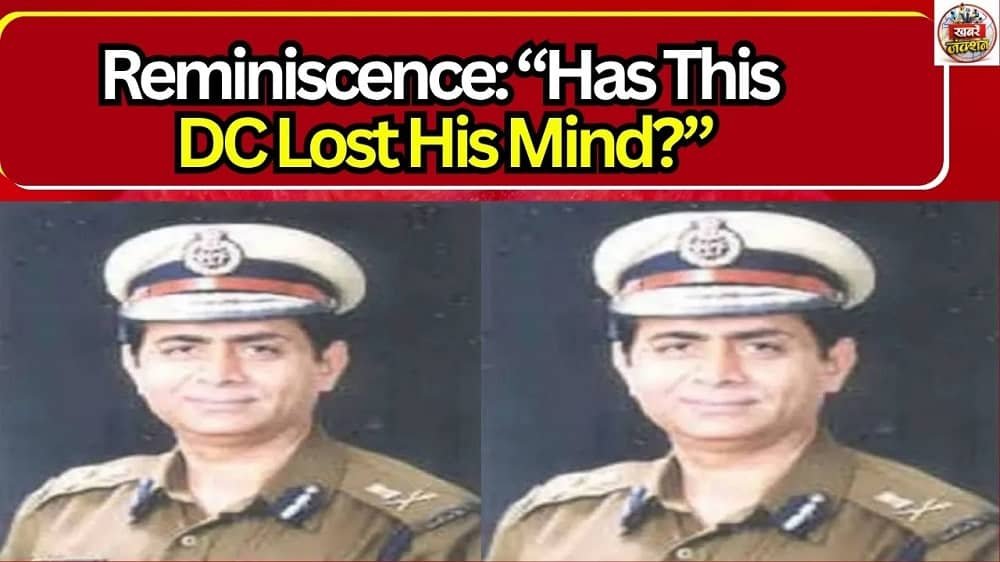
Reminiscence: Remembering Retired DGP Ajit Singh Bhatotia,
“Has this DC lost his mind?”
This is not a recent episode, but a story from nearly 48 years ago—when I was a modest reporter with The Indian Express in Jind, and Ajit Singh Bhatotia was serving as the district’s Superintendent of Police (SP).
At the time, my reports had stirred considerable activity within administrative circles. Agitated by the coverage, the then Deputy Commissioner (DC) of Jind, Jagat Ram, issued me a strongly worded notice. The आरोप was serious: my reporting, he claimed, risked inciting communal tension. He went a step further, questioning why I should not be arrested under the National Security Act (NSA), and gave me a three-day ultimatum to reveal my sources.
Reading the letter, I was momentarily taken aback—but not intimidated.
The very next day, I walked straight into the SP’s office. The atmosphere was relaxed. Over tea, I smiled and asked, “Sir, when are you arresting me?”
Bhatotia looked surprised. I then placed the DC’s “love letter” in front of him. As he read it, he burst into laughter and remarked,
“Has he lost his mind?”
Back then, I was just a stringer—no big name, no influence. But I had already begun to understand a crucial survival strategy in journalism: maintain a working relationship with at least one of the two key district अधिकारियों—the DC or the SP—so that the space to report the truth remains intact.
These nuances are not taught in journalism schools. They are learned on the ground—by taking risks, navigating pressure, and standing firm in the face of adversity.