
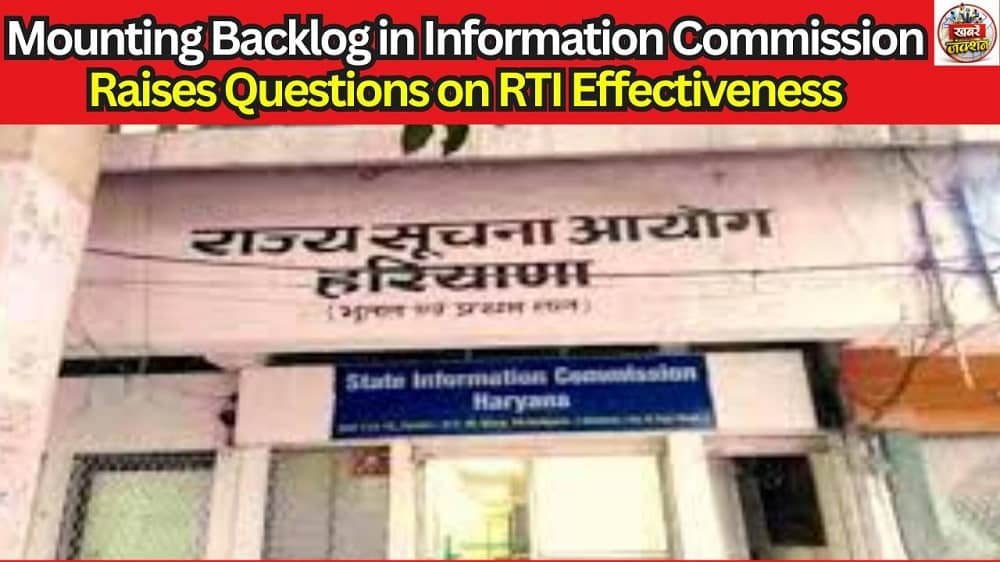
Mounting Backlog in Information Commission Raises Questions on RTI Effectiveness
Gustakhi Maaf Haryana- Pawan Kumar Bansal.
By our enlightened reader Rajiv Vats.Huge backlog of appeals before Haryana Information Commission defeating its purpose.In developing democracies such as India, concerns have periodically been raised over an alleged nexus between political power, the administrative machinery, and the corporate sector. Critics argue that such collusion can heighten the risk of misuse of public resources and lead to the neglect of citizens’ interests.
Amid these concerns, the government led by former Prime Minister Manmohan Singh enacted the Right to Information (RTI) Act in 2005 after nearly three decades of sustained public advocacy. The law was designed to promote transparency and accountability in governance by granting ordinary citizens access to official records that were previously limited to elected representatives and government officials. Under its provisions, authorities are required to furnish requested information within 30 days.
In its initial years, the RTI Act was widely regarded as an effective tool for transparency. Activists across several states used official documents obtained under the law to expose instances of corruption, abuse of power, and administrative irregularities. However, this process also exposed many activists to significant risks, with some reportedly losing their lives. Despite these challenges, the legislation played a crucial role in strengthening institutional accountability.
 Following 2014, when the Bharatiya Janata Party assumed power at the Centre, criticism emerged regarding appointments to information commissions and their functioning in various states. Some observers alleged an increasing trend of appointing retired bureaucrats,and party workers raising concerns about the impartiality and efficiency of these bodies.
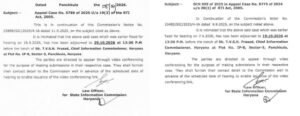
In states such as Haryana, complaints have also surfaced about a growing backlog of appeals within information commissions and prolonged delays in hearings. While decisions were earlier delivered in relatively shorter timeframes, critics now point to instances where hearings are scheduled months or even years later. There have also been allegations of cases being deferred without substantive hearings.
Observers further contend that despite improvements in physical infrastructure, the expected gains in efficiency have not materialized. Questions have also been raised about the working style and expertise of some information commissioners.
In light of these developments, several civil society groups and RTI advocates emphasize the need for renewed public awareness and institutional reforms to restore the original spirit of the RTI Act and ensure its continued effectiveness.Tailpiece.Despite good work by RTI activists there are some reports of its misuse for extortion.