
Tragedies by DEG in cough syrup- Fatal or Curable ??
Gustakhi Maaf Haryana- Pawan Kumar Bansal
By our enlightened reader GL Singal retired Haryana Drug Controller.
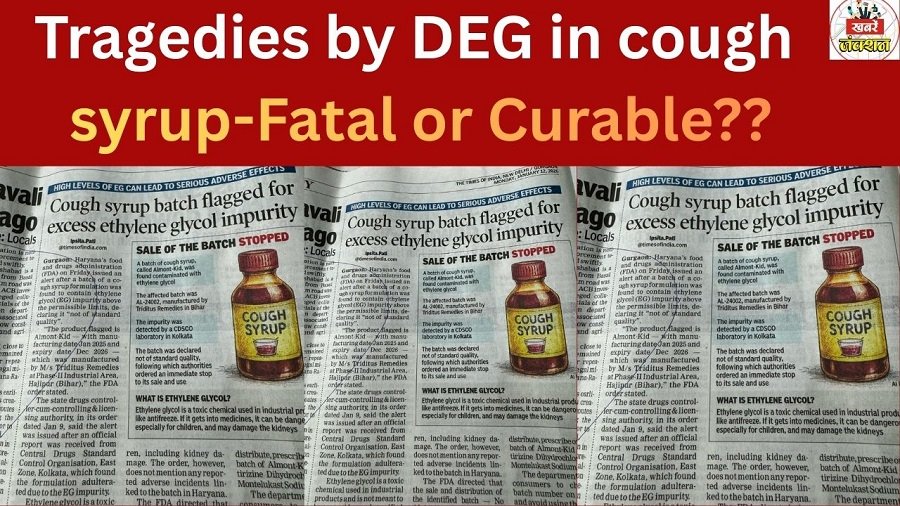
Cough syrup batch flagged for excess enthylenl glucose -This indicates a catastrophic collapse in drug manufacturing and regulatory oversight which is happening again and again in the country We could not get lesson from Tragedies in JJ Hospital, Mumbai in 1980s, Paracetamol syrup tragedy in Gurgaon during late 1990s taking so many lives of innocent children, followed by many other such tragedies including Jammu wherein cough syrup mfg by HP based firm proved fatal.
Gambia tragedies of around 70 innocent children is not forgotten and recent MP tragedy killing around 20 children without any major ailment (simple cough/fever)and now again DEG in oral syrup, although no tragedy but again it is DEG which is culprit.
MP tragedy led to the deaths of children due to toxic Coldrif cough syrup containing extremely high levels of diethylene glycol.
– The Coldrif syrup (Batch SR-13) contained 48.6% diethylene glycol, nearly 500 times above permissible limits, causing fatal acute kidney failure in children mfg by Sresan Pharmaceuticals in Tamil Nadu. This company manufactured the syrup using industrial-grade chemicals sourced from uncertified traders, including Propylene Glycol without contaminant testing, violating procurement norms.
– Chemical purchases were made via cash and Google Pay, bypassing documentation and official scrutiny, with supplies even from paint industry dealers instead of pharmaceutical suppliers.
– The facility operated with untrained staff, lacked qualified chemists, and performed no quality or purity testing for raw ingredients or water.
– The fatal syrup had circulated for months in M P and also reached markets in Tamil Nadu, Odisha, and Puducherry before detection.
– Regulatory response included cessation of production, freezing of all stock, suspension of Sresan Pharmaceuticals’ license, and legal action against drug inspectors and officials.
– The tragedy was attributed by officials to a systemic collapse spanning chemical procurement in Chennai to lack of oversight during production in Kancheepuram, compounded by unchecked distribution.
– The Madhya Pradesh government suspended two drug inspectors and a deputy director and arrested a local doctor for negligence related to the case but the real culprit is long delay of implementation of the revised schedule M.
Regulatory and Systemic Issues
– The incident exposes severe gaps in Indian pharmaceutical supply chains, manufacturing practices, and enforcement under the Drugs and Cosmetics Act.
– Enforcement failures allowed non-certified chemicals, , and lack of qualified production staff, culminating in toxic medicines reaching vulnerable children.
– The government initiated major administrative actions and licensing suspensions, but systemic reforms in procurement, inspection, and real-time tracking of distribution remain urgently needed.
The cases underscores the critical need for robust regulatory oversight, stringent backward procurement mandatory through Blockchain technology and batch testing protocols, in India’s pharmaceutical manufacturing and distribution sectors.
Everytime we have tragedy, we do some temporary arrangement (Leepa Poti) to settle the dust, in spite of the fact that we know the disease and its treatment, without any RCA (Root Cause Analysis) and CAPA (corrective and preventive action) which is indispensable part of our GMP in Drug manufacturing .
Till our CAPA is not implemented with full commitment, such tragedies are inevitable at the cost of poor innocent lives.
There is no harm if the solvent like Propylene Glycols are banned in oral paediatric drug formulations in larger public interest, if we (regulators) are incapable of preventing use of DEG or contaminated PG or other such solvents ( with DEG). But there appears to be lack of “will”