
The Aravalli Paradox: Can Privatization Lead to Conservation? Forester vs. Former DC: The Battle for the Aravalli.
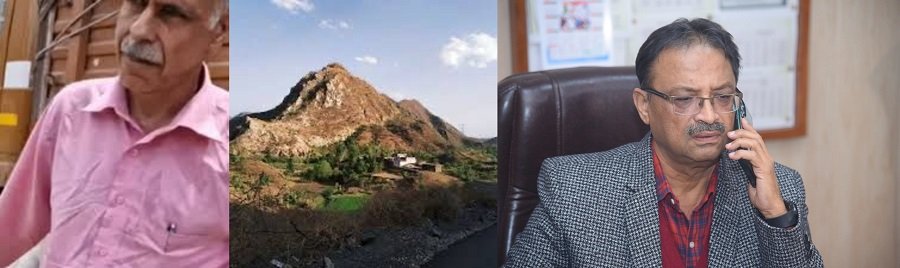
Gustakhi Maaf Haryana-Pawan Kumar Bansal
Issue of privatisation of forests as suggested by Ex Faridabad DC,Parveen Kumar-View of Vinod Bhatia retired IFS ,Haryana.co Speaks 117: A Green Dream or a Faustian Bargain for the Aravallis?
A DC in Haryana recently said that since forest department is not doing its job of greening Aravalli properly all land should be sold to private people and a criterion be fixed to have 75 percent of that land under trees. This way more greening can be created. As a retired Indian Forest Service officer who has dedicated a significant part of my life to the forests of Haryana, particularly the Aravallis, I find myself contemplating this proposition with a mix of intrigue and trepidation.
Let me be clear: the frustration expressed by the DC regarding the pace and effectiveness of greening efforts in the Aravallis is not new. It’s a sentiment shared by many, including those of us who have worked tirelessly within the system. The challenges are immense – encroachment, illegal mining, a burgeoning population putting pressure on land, and indeed, sometimes the sheer inertia of bureaucracy can be disheartening. The Aravallis are a critical ecological backbone for our region, a natural shield against desertification, and a vital source of groundwater recharge. Their degradation is a matter of grave concern for all of us.
The DC’s proposed solution – divesting public land to private hands with a strict greening mandate – is, on the surface, an out-of-the-box idea aiming for rapid ecological restoration. The logic seems to be that private ownership, driven by profit and perhaps a more agile decision-making process, could achieve what the government machinery has struggled with. The 75% tree cover criterion is undeniably ambitious and, if genuinely enforced, could indeed lead to a significant increase in green cover. Imagine vast stretches of the Aravallis, currently degraded and barren, transformed into thriving forests. It’s a tempting vision.
However, as someone who has witnessed the complexities of land ownership and environmental protection firsthand, I must caution against a simplistic approach. This idea, while seemingly innovative, carries a multitude of potential pitfalls that need careful consideration before any such radical step is contemplated.
Firstly, the very notion of “selling” Aravalli land raises fundamental questions about public trust and the long-term stewardship of a vital natural heritage. These lands, by and large, are common property resources, providing ecological services that benefit everyone. To privatize them, even with noble intentions, risks commodifying nature and potentially excluding the very communities that have historically depended on and coexisted with these forests.
Secondly, ensuring the “75% tree cover” is not as straightforward as it sounds. What kind of trees? Native species, crucial for biodiversity and ecological balance, or fast-growing, monoculture plantations that offer little in terms of true ecological value? Who will monitor this effectively and consistently over decades, not just years? What are the penalties for non-compliance, and will they be robust enough to deter exploitation? We have seen countless instances where environmental regulations, however well-intentioned, are circumvented or diluted over time. The “developer” mindset, often prioritizing short-term gains, might find loopholes to fulfil the letter of the law while violating its spirit.
Thirdly, the Aravallis are not just about trees. They are a complex ecosystem encompassing unique geology, hydrology, and a diverse range of flora and fauna. A private entity, focused solely on achieving a tree-count target, might inadvertently disrupt delicate ecological balances. Moreover, the land value of the Aravallis is immense, particularly given their proximity to major urban centres. There is a very real risk that the “greening” criterion could become a smokescreen for land speculation and eventual conversion for other purposes once the initial tree cover is established. We must be vigilant against any move that could ultimately lead to further concretization, rather than true conservation.
Finally, and perhaps most importantly, we need to critically examine why the Forest Department might be perceived as “not doing its job properly.” Is it a lack of intent, or is it a chronic shortage of resources, manpower, legal backing, and public cooperation? Are there systemic issues that need addressing within the existing framework? Simply divesting land without fixing these underlying problems might be akin to throwing the baby out with the bathwater.
Instead of a radical, potentially irreversible step like privatizing Aravalli lands, I believe we should first explore strengthening the existing institutions and empowering the Forest Department. This means providing adequate funding, modern technology, enhanced legal powers to tackle encroachment and illegal activities, and fostering greater public participation in conservation efforts. Community-based conservation, eco-tourism initiatives that benefit local populations, and robust enforcement of environmental laws could yield significant and sustainable results.
While the DC’s idea is undoubtedly provocative, it serves as a stark reminder of the urgent need to rejuvenate the Aravallis. However, the path forward must be one of careful consideration, rooted in ecological principles, social equity, and long-term sustainability. Selling our natural heritage, even with the best of intentions, could prove to be a Faustian bargain, one that future generations might bitterly regret. Let us instead work together to empower the guardians of our forests and ensure the Aravallis thrive for all.
Let us not forget that the Supreme Court has, over the years, issued several landmark judgments concerning the protection of the Aravallis, particularly in Haryana. These judgments have often been very stringent, aiming to prevent further degradation of the ecologically fragile range. For instance, the Supreme Court has consistently ordered the demolition of illegal structures in the Aravallis, regardless of the hardships faced by the occupants, emphasizing the paramount importance of environmental protection. The demolition drive in Khori village, Faridabad, is a prominent example where the Supreme Court’s directives led to the removal of thousands of encroachments from forest land. A former DC, who has been at the ground level implementing these complex directives, might indeed feel the pinch of these judgments. A DC might believe that there are alternative, more pragmatic solutions to Aravalli protection than blanket demolitions, such as regulated development with strict greening norms (as in the first scenario I presented), or innovative rehabilitation strategies. Such a statement, if accurately attributed, would highlight the ongoing tension between strict legal interpretations of environmental protection and the practicalities of governance and human impact on the ground. It would undoubtedly reignite debates about the balance between judicial activism and executive discretion in environmental matters.
As a retired Indian Forest Service officer, the statement by a former DC like Praveen Kumar, particularly if he is indeed advocating for a review of Supreme Court judgments concerning Aravalli land, would be met with profound concern and disagreement from my tribe of foresters. For a forester, the Supreme Court is the ultimate arbiter of the law. Its judgments, especially those concerning the Aravallis, are not mere suggestions but binding directives that underscore the constitutional mandate of environmental protection. Pleading for a “review” of such judgments, particularly when they uphold environmental safeguards, undermines the very rule of law that protects our natural heritage.
The Supreme Court’s pronouncements on the Aravallis didn’t come out of nowhere. They are the culmination of years of environmental advocacy, scientific studies, and a deep understanding of the Aravallis’ critical ecological role – as a groundwater recharge zone, a biodiversity hotspot, a barrier against desertification, and the lungs of the NCR. A forester views these judgments as essential shields for an already embattled ecosystem. A significant aspect of the Aravalli legal battles revolves around the Punjab Land Preservation Act (PLPA) and the concept of “deemed forests.” The Supreme Court has repeatedly affirmed that land covered under PLPA notification, even if not officially designated as a “forest” under the Indian Forest Act, 1927, is nonetheless forest land for all practical purposes due to its ecological characteristics. Any attempt to dilute or circumvent these definitions, which a plea for review might imply, is a direct assault on forest conservation.
Forest lands, especially those like the Aravallis, are held in trust by the state for the benefit of present and future generations. This is the essence of the Public Trust Doctrine, frequently invoked by the judiciary. A forester’s duty is to protect this trust. Pleading for a review that might ease restrictions on private interests, potentially leading to further encroachment or exploitation, goes against this fundamental principle. The Aravallis have a long and painful history of illegal mining, encroachment, and land grabbing. Many Supreme Court judgments have been necessary precisely because administrative mechanisms failed to prevent this exploitation. A forester would see any attempt to relax these judgments as opening the floodgates for a return to unchecked destruction.
While a DC might grapple with the immediate humanitarian fallout of demolition drives (which is undeniably challenging), a forester operates with a long-term ecological vision. The “hardship” of removing illegal structures, while real for those affected, is often dwarfed by the irreversible ecological damage caused by continued encroachment and degradation of vital forest land. Strict enforcement of Supreme Court orders, even if unpopular in the short term, sets crucial precedents and acts as a deterrent against future illegalities. Weakening these judgments, through review, would send a dangerous signal that environmental laws can be circumvented, thereby encouraging more encroachments.
A forester’s professional oath involves upholding forest laws and protecting natural resources. The Supreme Court judgments are the strongest tools available to the Forest Department to fulfil this duty, especially when facing powerful vested interests. To advocate for their review is to undermine the very framework within which foresters operate. The Forest Department often finds itself as the respondent in such cases, tasked with implementing these difficult orders. While they understand the ground realities, their primary allegiance is to the ecological health of the forests as mandated by law. A retired DC pleading for review implies a disconnect with this core mandate.
If there are difficulties in implementation, or genuine humanitarian concerns, the solution for a forester is not to weaken the legal protection of the forests. Instead, it is to address the systemic issues: provide adequate resources for enforcement, develop robust rehabilitation policies (for legitimate cases of displacement, though illegal encroachers often fall outside this), and strengthen inter-departmental coordination. Any perceived “rigidity” in judgments often stems from pre-existing policy gaps or administrative failures that led to the degradation in the first place. The judiciary steps in when the executive fails. A forester would argue for fixing the policy and implementation machinery, rather than diluting the judicial oversight that ensures environmental protection.
In essence, for a forester, the Supreme Court judgments on the Aravallis represent the last line of defense for a critically endangered ecosystem. To suggest their review is to implicitly argue for a compromise on environmental protection, a stance that goes against the core principles and decades of hard-won battles for forest conservation in India. It signals a prioritization of perceived administrative convenience or local political pressures over the fundamental ecological integrity and legal sanctity of our forests.
The retired DC who gave this idea of privatization of Aravalli Lands seems to believe that the current approach to greening the Aravallis by the Forest Department is inadequate and ineffective. To address this perceived failure, the DC proposes a radical solution: privatizing the Aravalli land. The core idea is that by selling these lands to private individuals or entities, a more efficient and effective greening process can be achieved. The key condition for this privatization would be a strict mandate for private buyers to ensure that 75% of the acquired land is under tree cover. The DC’s reasoning is that this private ownership, coupled with a specific greening criterion, would lead to more rapid and extensive tree plantation and overall greening of the Aravallis than the current public sector efforts.
DC views privatization as a pragmatic, results-oriented mechanism to achieve large-scale ecological restoration, believing that private enterprise can deliver better environmental outcomes where government departments are seen to be faltering. They might also implicitly believe that such a move could alleviate some of the on-ground implementation challenges and social pressures associated with strict enforcement of existing forest laws on encroached lands, as seen in cases like the Supreme Court’s judgments.
I deliberately picked this topic with an aim to provoke a thoughtful, informed, and action-oriented response from readers, moving beyond simplistic solutions to demand robust, ecologically sound, and equitable approaches to Aravalli conservation. They should feel compelled to protect this vital natural asset for the future. Readers should recognize that this isn’t a black-and-white issue. The article highlights the complexities – the frustration with current greening efforts, the potential (albeit risky) allure of private efficiency, and the fundamental concerns about public land, ecological integrity, and equity.
They should ask: Is the Forest Department truly failing, or are they under-resourced and battling overwhelming odds? Is private ownership inherently more efficient for ecological restoration, or are there hidden motives? Is 75% tree cover enough to constitute a true ecosystem? Readers should think beyond immediate gains and ponder the long-term implications of privatizing common lands, especially for an ecologically sensitive zone like the Aravallis. What precedent would it set? Who benefits? Who loses? What are the implications for local communities, wildlife, and future generations?
If the DC alleges the Forest Department is failing, readers should demand evidence. Conversely, if the private model is proposed, they should seek concrete plans on enforcement, monitoring, and long-term ecological viability. What does “greening” truly entail? Is it monoculture plantations or native, biodiverse forest restoration? Readers should seek clarification on these crucial details. If 75% tree cover is the criterion, who will monitor this over decades? What are the penalties for non-compliance?
Readers should write to their MLAs, MPs, the Chief Minister’s Office, and relevant departments (Forest and Urban Development) to share their opinions on the DC’s proposal and the IFS officer’s counterarguments. If public consultations are held (which they absolutely should be for such a major policy shift), readers should actively participate and voice their informed opinions. Readers who feel strongly should consider supporting NGOs and environmental groups that are actively working on Aravalli conservation and advocating for its protection under public ownership. While policy changes are large-scale, readers can also reflect on their own environmental footprint and how they interact with natural spaces.
ppsv123@gmail.com.